
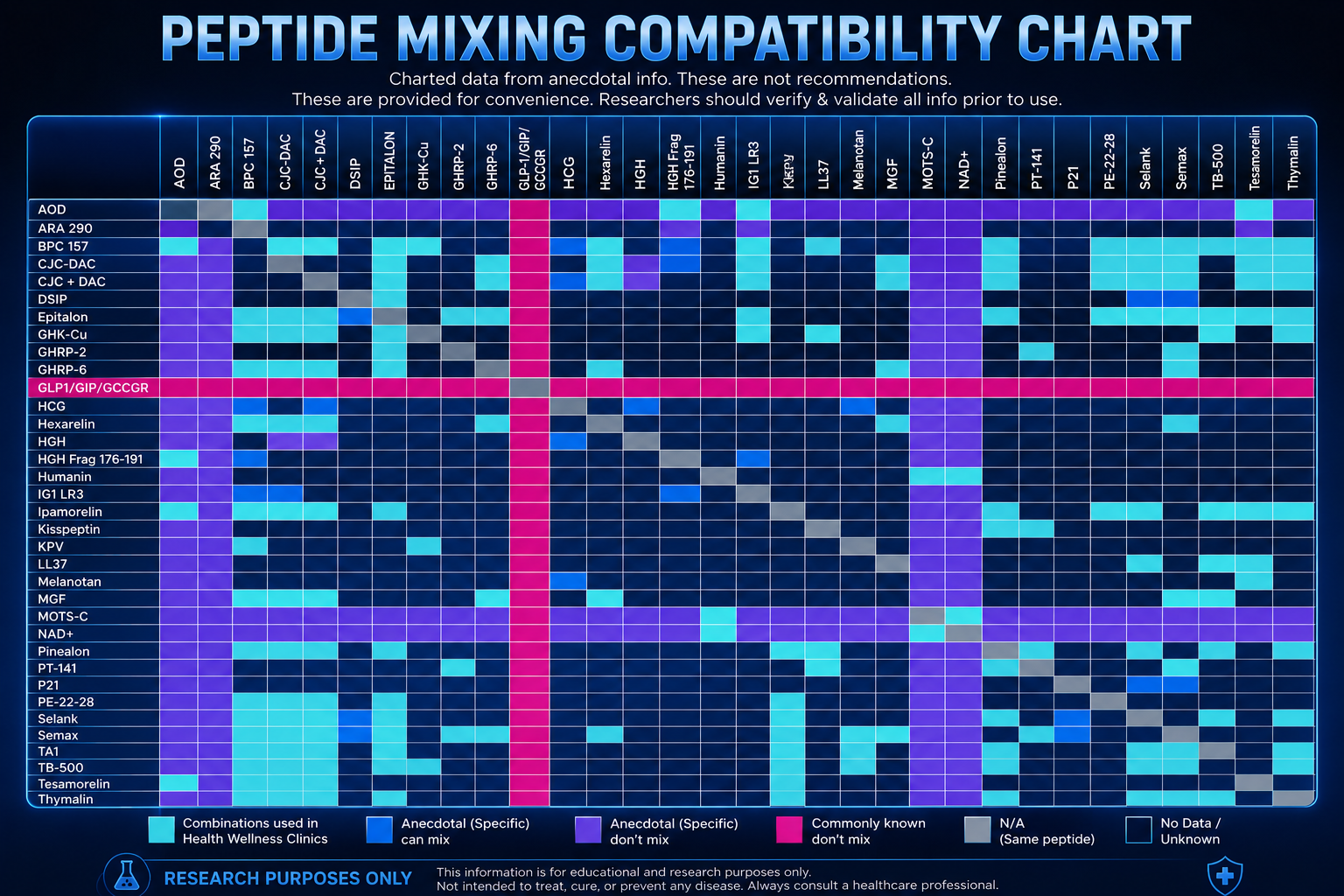
This Peptide Mixing Compatibility Chart is a quick-reference resource designed to help researchers review commonly discussed peptide mixing combinations. It compiles anecdotal information from research communities and wellness clinic practices into a single visual guide for educational purposes.
The chart highlights:
- Peptides that are commonly reported as compatible for mixing.
- Anecdotal combinations that some researchers have successfully mixed.
- Combinations generally reported as incompatible.
- Peptide pairings where there is little or no available data.
- Same-peptide references for comparison.
This resource is intended as a convenient reference only and should not be interpreted as a recommendation to mix peptides. Much of the available information comes from anecdotal reports rather than controlled scientific studies. Compatibility can depend on numerous variables, including peptide chemistry, formulation, pH, concentration, excipients, storage conditions, and intended handling procedures.
Researchers should independently verify all compatibility information through manufacturer documentation, published literature, or laboratory validation before combining compounds.
Disclaimer: This chart is provided strictly for educational and research purposes. It does not constitute medical advice, clinical guidance, or a recommendation to mix any peptides. Always follow manufacturer instructions and applicable laboratory best practices.